Is Email Tracking Legal? A Guide to Privacy, GDPR, and 1-to-1 Tracking
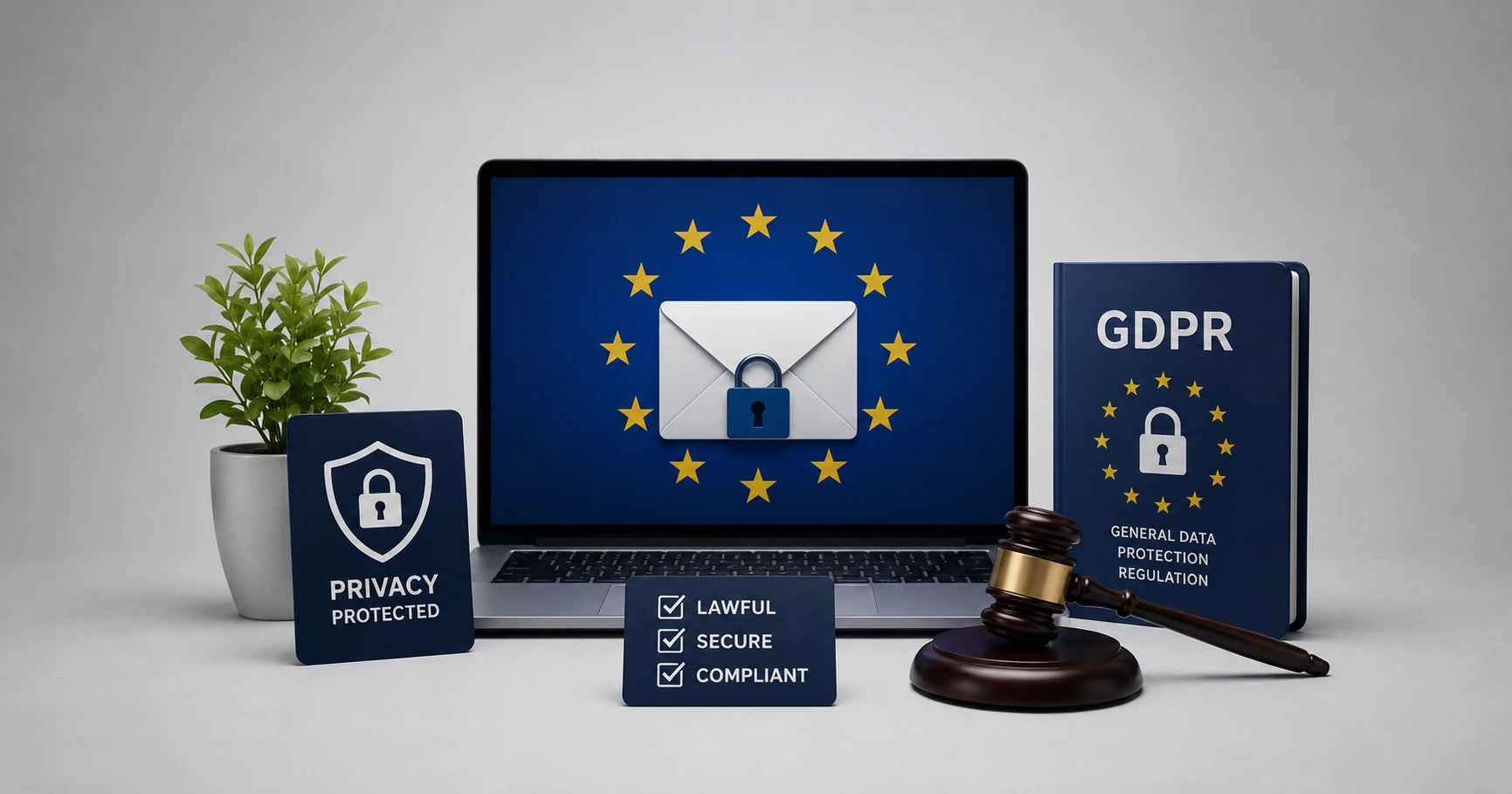
Executive Summary
Email tracking is fundamentally legal, but the rules change drastically depending on whether you are sending a mass marketing campaign or a single 1-to-1 professional email. While newsletters require strict consent, individuals sending contracts or invoices operate under "legitimate interest." Secure tracking is easily achieved by avoiding invasive inbox extensions and using edge-level IP masking tools like MailPing to eliminate Data Controller liability.
The Golden Rule: Intent Determines Legality
The legality of email tracking is not a simple "yes" or "no"—it depends entirely on why you are sending the email. Mass marketers blasting thousands of newsletters are heavily regulated and must obtain explicit consent to harvest engagement data. However, if you are a freelancer, lawyer, or sales professional sending a direct, 1-to-1 email to a client, you operate under a completely different set of rules. For individual correspondence, tracking is considered a standard business practice, much like sending certified mail through the physical post office.
GDPR and "Legitimate Interest" Explained
When people worry about email tracking legality, they are usually thinking about the General Data Protection Regulation (GDPR) in Europe or the CCPA in California. These frameworks were designed to stop massive corporations from secretly profiling consumers.
However, the GDPR includes a specific provision called Legitimate Interest. If you are tracking a business proposal, an invoice, or a freelance contract to confirm it was successfully received, you have a legitimate, defensible business reason for needing that delivery receipt. Because you are tracking a single relationship rather than building a mass marketing profile, 1-to-1 email tracking generally satisfies this requirement, provided the data you collect is kept to the absolute minimum.
CAN-SPAM: Do I Need an Unsubscribe Link?
Another major legal framework is the CAN-SPAM Act, which dictates how commercial emails must be handled. Many people mistakenly believe that adding a tracking pixel means you legally have to include an "Unsubscribe" button at the bottom of your message.
This is only true for bulk commercial marketing. If you are sending a relational or transactional email—like communicating with an existing client or sending a project update—the rules are different. For a deeper dive into the difference between commercial and relational messages, read our complete guide on whether tracked emails need an unsubscribe link.
The PII Problem: Are IP Addresses Personal Data?
The biggest compliance trap for average users is how their tracking software handles data. Under modern privacy laws, a raw IP address is considered Personally Identifiable Information (PII). If your tracking software stores raw IP addresses, you technically become a "Data Controller" and take on legal liability.
To safely track emails, you must use a tool that strips this PII before it is ever saved. MailPing solves this automatically by mathematically masking the final octet of the recipient's IP address at the server edge. You get the location data you need (like City and Country) without ever storing a raw, trackable IP. To understand exactly how this masking protects you from liability, check out our technical breakdown: Are IP Addresses Personal Data?
Why Browser Extensions Pose a Security Risk
Even if your intent is legal, the method you use to track can expose you to severe privacy violations. Many popular CRM tools require you to install browser extensions or grant full OAuth permissions. This literally gives a third-party company the ability to read, write, and delete emails directly inside your personal inbox.
We break down these vulnerabilities in detail in our article on why email tracking extensions are a security risk. Using a standalone, zero-access tracker like MailPing bypasses this risk entirely. By generating a simple URL that you paste into your email, you gain enterprise-grade tracking metrics without ever handing over the keys to your inbox.
Explore the Privacy & Legal Cluster
Is Email Tracking Legal? A Guide to Privacy, GDPR, and 1-to-1 Tracking
Email tracking is fundamentally legal, but the regulatory framework changes drastically depending on your intent.

Try MailPing for free
Generate an invisible, proxy-aware tracking link to confidently verify when your important emails are opened. No CRM required, zero inbox access.
Related Questions
Is it illegal to track an email without permission?
It is generally not illegal for an individual to track a 1-to-1 business email without explicit permission, as this falls under the legal concept of legitimate interest. However, mass marketing emails do require explicit consent under laws like the GDPR and CAN-SPAM. For 1-to-1 communications, using a privacy-first tool like MailPing ensures you comply by not harvesting unnecessary personal data.
Are IP addresses considered personal data in email tracking?
Yes, under strict privacy laws like the GDPR and CCPA, raw IP addresses are classified as Personally Identifiable Information (PII). To remain compliant, tracking tools must avoid storing this data. MailPing handles this by mathematically masking the final octet of IP addresses at the edge, removing Data Controller liability.